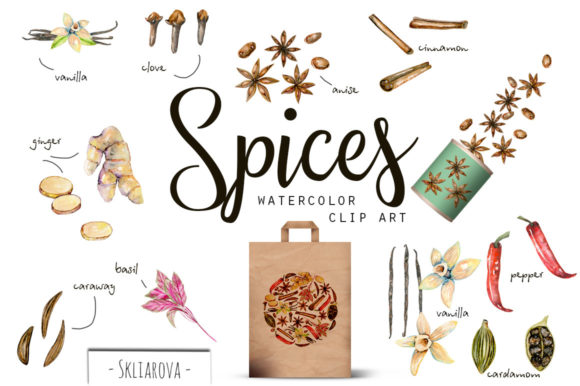
Spices Watercolor Clipart: A Designer's Guide to Flavorful Visuals
There's a certain warmth and authenticity that watercolor brings to digital design. It feels handmade, organic, and full of texture. When that artistic style is applied to a universal theme like spices, the result is a collection with incredible versatility. The Spices Watercolor Clipart set isn't just a random assortment of illustrations; it's a curated toolkit designed to inject a dose of artisanal charm and natural elegance into a wide array of projects. Think of it as the visual equivalent of a well-stocked spice rack for your creative work.
This collection provides 29 isolated spice elements, each rendered with the delicate bleeds, subtle gradients, and imperfect edges that define the watercolor style. From vibrant turmeric and paprika to the intricate textures of star anise and cinnamon sticks, each piece is saved as a high-resolution PNG with a transparent background. This makes them true design assets, ready to be layered, scaled, and composed without the hassle of cutting out backgrounds. For projects needing a cohesive backdrop, the included seamless pattern in JPEG format offers a sophisticated, repeatable texture perfect for larger applications. At 300 dpi in RGB, the quality is built for both digital screens and print reproduction.
Where Flavor Meets Function: Practical Applications
The real strength of Spices Watercolor Clipart lies in its adaptability. It bridges the gap between rustic charm and modern professionalism, making it suitable for a surprising range of contexts. For small business owners in the food industry—think artisan bakeries, specialty tea shops, or cooking class instructors—these elements are perfect for creating an authentic brand identity. Use a single clove illustration as a subtle logo mark, or arrange several spices to create a beautiful header for a website or menu.
Content creators and bloggers can leverage these graphics to enhance food photography, design eye-catching Pinterest pins, or create cohesive social media graphics that stop the scroll. The watercolor style adds a layer of handmade appeal that resonates well on platforms like Instagram and Etsy. For print designers, the applications are just as broad. Consider using the seamless pattern for elegant wedding invitation backgrounds, creating textured labels for homemade preserves, or designing unique greeting cards and posters. The high-resolution files ensure crisp results, whether you're printing on paper, fabric for tote bags and tea towels, or other textiles.
Building a Cohesive Visual Language
Using a themed clipart collection like this strategically can significantly influence your project's visual hierarchy and audience engagement. The consistent artistic style across all 29 elements allows you to build a unified look and feel. This consistency is key to professionalism and brand recognition. Instead of sourcing mismatched graphics, you have a built-in system for creating harmony.
When incorporating these graphics, think about their role in your layout. A large, detailed illustration of a vanilla pod can serve as a powerful focal point in an editorial design or on a poster. Smaller elements, like individual peppercorns or cumin seeds, work wonderfully as subtle accents, icons, or bullet points in a list, guiding the reader's eye without overwhelming the text. This thoughtful placement helps establish a clear visual hierarchy, making your designs not only more beautiful but also more effective at communicating information.
Pairing and Practical Considerations
While the clipart itself is the star, the fonts and other design elements you pair with it will determine the final mood. The organic, slightly whimsical nature of watercolor illustrations often pairs beautifully with clean, modern typography. A sans serif font can provide a crisp, contemporary counterbalance, letting the illustrations pop. Alternatively, a classic serif font can enhance a traditional, gourmet feel. For a more rustic or artisanal vibe, a carefully chosen script or handwritten font can complement the style, but use it sparingly for headlines or accents to maintain readability.
Before diving in, evaluate the collection against your project's specific needs. Look at the color palette of the spices—does it align with your brand's colors? Consider the complexity of the illustrations; some are detailed and best used at larger sizes, while others are simpler and scale down well for icons. Always test your designs at the intended output size, whether it's a small web graphic or a large-format print, to ensure clarity and impact. Finally, a note on commercial use: this collection is a premium font and asset resource, meaning it's typically licensed for both personal and commercial projects. Always review the specific license agreement to understand the scope of use, especially for high-volume printing or trademark registration.
In a digital landscape saturated with flat, vector graphics, the tactile quality of Spices Watercolor Clipart offers a refreshing alternative. It provides a practical and visually rich solution for anyone looking to add a touch of nature, craftsmanship, and warmth to their work. By understanding its strengths and applying it thoughtfully, you can create designs that feel both personal and professionally polished.